
What are Plantation Shutters?
Plantation shutters are a type of window covering that consists of solid, louvered panels mounted on a frame. They are commonly installed on the interior side of windows and are known for their elegant and timeless appearance. Plantation shutters are characterised by their wide slats or louvres, which can be adjusted to control the amount of light and privacy in a room.
The term “plantation shutters” originates from their historical use in large plantation houses in the southern United States. These shutters were initially designed to provide protection from the elements while allowing air circulation, and they were commonly made from wood. Today, plantation shutters are available in a variety of materials, including wood and composite (UPVC).
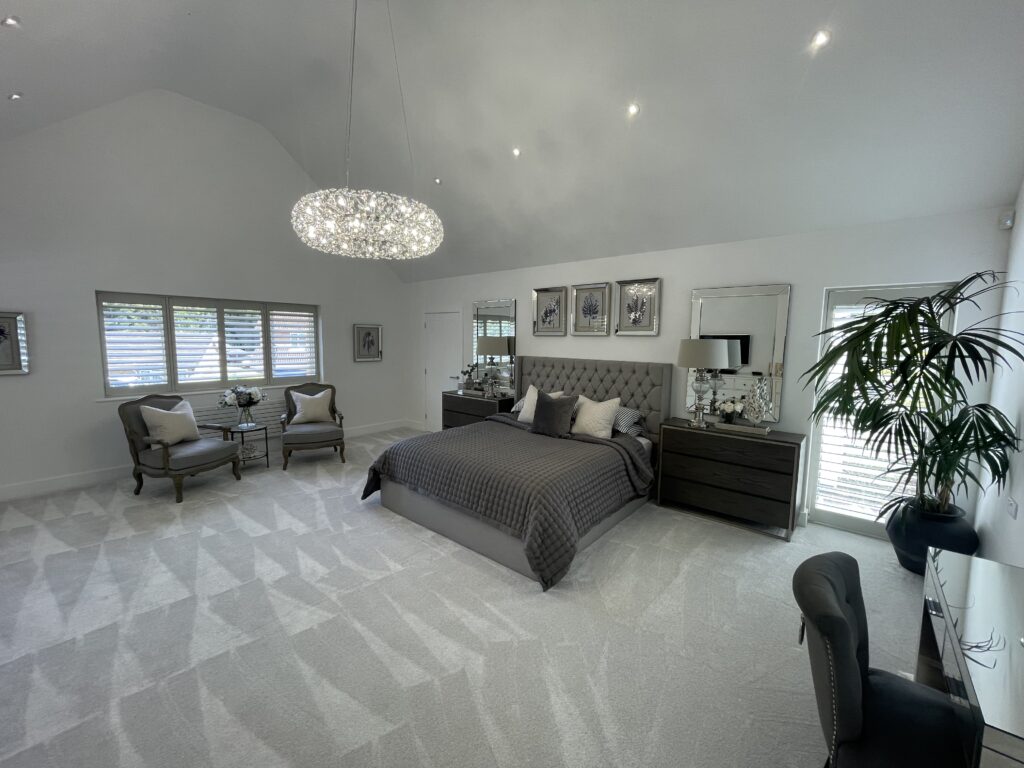
Plantation shutters are often favoured for their versatility and aesthetic appeal. They can be custom-made to fit various window sizes and shapes, and they come in a range of finishes and colours to match different interior styles. The adjustable louvres enable precise control of light and airflow, and when fully closed, they provide excellent insulation and privacy.
In addition to their functional benefits, plantation shutters are regarded as a durable and long-lasting window treatment option. They can add value to a home and are often considered a timeless and classic choice in interior design.
What are solid shutters?
Solid shutters, also known as panel shutters, are a type of window covering that consists of solid panels that completely block out light when closed. Unlike plantation shutters with adjustable louvres, solid shutters have fixed panels without any openings or slats. They are typically made from wood, although other materials like composite can also be used.
Solid shutters have a traditional and classic appearance and were commonly used in homes before the advent of modern window treatments. They are known for their ability to provide complete darkness, privacy, and insulation when closed, making them suitable for bedrooms, nurseries, or rooms where light control is important.
These shutters are typically hinged on the sides of the window frame and can be opened and closed as a unit. Some solid shutters also feature decorative elements, such as raised or recessed panels, which add visual interest to the shutters and the overall aesthetics of the room.
Solid shutters offer advantages such as excellent light control, insulation, and enhanced privacy. When closed, they can block out light completely, providing a dark and cozy environment. They also offer insulation benefits, helping to regulate the temperature inside the room and reduce noise from outside. However, it’s important to note that unlike plantation shutters, solid shutters do not allow for adjustable light and airflow control.
Can shutters be installed on any window?
Shutters can generally be installed on most windows, but the suitability of installation depends on several factors, including the type of window, its frame, and the available mounting space. The Norfolk Shutter Company Ltd provide only custom-made shutters enabling us to install to various window sizes and shapes, including standard rectangular windows, arched windows, bay windows, and more. However, irregularly shaped or extremely large windows may require special considerations and custom solutions.
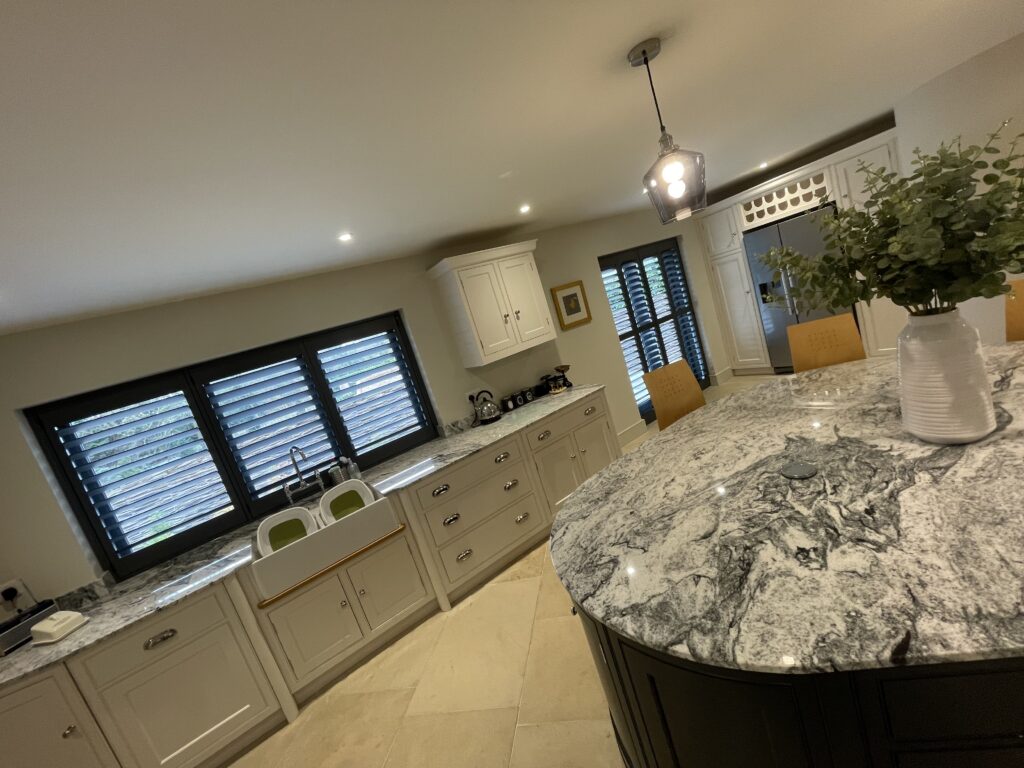
The material of the window frame can affect the installation process. Most shutters are designed to be installed on traditional wood or vinyl frames. If you have a different type of frame, such as metal or aluminium, you may need additional hardware. Shutters require a certain depth in the window recess or frame to be properly installed. Ensuring that there is enough clearance between the window glass and any obstructions such as window handles, locks, or window treatments like blinds or curtains. One of our highly trained experts can explain this to you at the time of survey and measuring. Accessibility of the window is not an issue, if it’s located in a hard-to-reach area, such as high ceilings or above stairs, installation may be more challenging but with the use of ladders or scaffolding we can achieve any install required.